Background Advisory Ventures Dispatches Contact
Personal AI Assistants Are Coming Home
All dispatches

Personal AI Assistants Are Coming Home

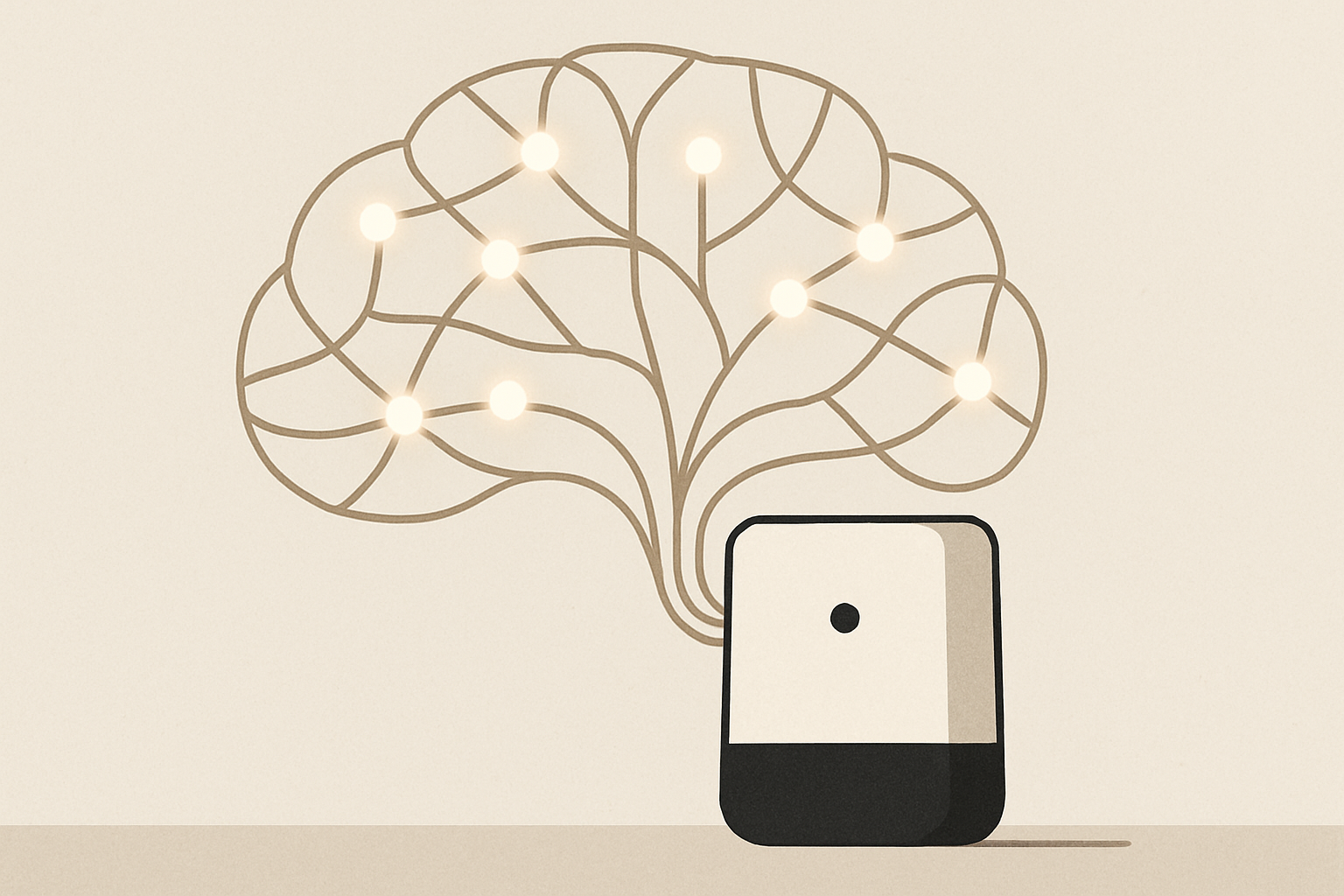
I’ve been thinking a lot this week about what happens when AI stops being a tool you visit and starts being a tool that lives with you. Not in the sci-fi sense — in the very practical sense of an AI assistant running on your personal machine, reading your actual emails, connected to your actual messaging apps, and doing real work on your behalf.

We’re at an inflection point here, and most people haven’t noticed yet.

The “Read My Own Emails” Problem

Here’s something I keep running into. You set up a personal AI assistant, connect it to your data, and then someone asks the obvious question: “What should it actually DO?” One response I’ve heard that stuck with me — “Maybe read my emails? I already read my own emails.”

It’s a fair point, and it highlights the gap between what’s technically possible and what’s practically useful. Nobody needs an AI to read emails TO them. What they need is an AI that understands the CONTEXT of those emails — who matters, what’s urgent, what connects to what — and then acts on that understanding. The difference between a personal assistant and a notification feed is judgment. And that’s exactly what these systems are starting to develop.

Skills Make the Difference

The raw capability of a local AI isn’t what makes it useful. Skills do. When you can give an assistant the ability to actually interact with your tools — browse the web intelligently, manage workflows, interface through Telegram or WhatsApp — that’s when it stops being a novelty and starts being infrastructure.

I’ve been building in this direction and I can tell you, the moment an AI assistant can take an idea you had at dinner and actually spin up work on it before you get home.. that’s not incremental improvement. That’s a fundamentally different relationship with productivity. I’ve lost count of the times I’ve had an idea on the move and had to just sit on it for hours until I could get back to a proper setup. A capable mobile interface to a skilled AI agent eliminates that bottleneck entirely.

The enterprise angle is interesting too — building partitioned versions of an assistant that can serve different users from one system. Think about a household where everyone has their own AI, tuned to their own data and preferences, running off shared infrastructure. That’s not far off. The architecture for it is pretty straightforward once you’ve got the core agent working.

The Security Question Nobody Can Avoid

Now here’s where it gets uncomfortable. The moment you connect an AI to your personal email, your WhatsApp, your text messages — you’ve made a significant trust decision. And you SHOULD be thinking hard about it.

I’ve seen people raise legitimate concerns about open-source AI tools getting access to this kind of data. “Are we not concerned about sharing too much access?” It’s a valid question. But here’s my take — I’d actually be MORE worried if it were closed source and new. With open source, at least the code is auditable. You can see exactly what it’s doing with your data. With closed source, you’re trusting a black box with your most personal communications.

That said, open source and new still means the security surface hasn’t been battle-tested. You should be thoughtful about what you connect and how. I think the right approach is progressive trust — start with low-sensitivity integrations, verify behavior, then expand access as you build confidence in the system.

The reality is, we’re already making these trust decisions every day with cloud services. Your email provider can read everything. Your messaging apps have access to your conversations. The difference with a local AI is that the data stays on YOUR machine, processed by YOUR instance. In many ways, that’s a better security posture than what most people currently have.

What I’m Actually Seeing Work

The tools showing up right now are genuinely interesting, even if they’re a bit unpolished. Running Claude from your mobile device, interfacing through messaging apps you already use, giving agents the ability to take autonomous action on your behalf — the pieces are all there. The polish will come.

What matters is the architecture. You want a system that can:

  1. Maintain persistent context about YOUR world — your contacts, your projects, your priorities
  2. Interface through channels you’re already using — not force you into yet another app
  3. Execute skills autonomously when appropriate, but know when to check in with you
  4. Keep your data local and under your control

That’s not a product description. That’s what I’m building toward and what I’m seeing others converge on independently. The pattern is clear.

The Bottom Line

We’re past the point of asking whether personal AI assistants are useful. The question now is how fast the tooling matures and how thoughtfully we handle the security implications. The people who figure out the right balance between capability and caution — giving these systems enough access to be genuinely useful without being reckless about personal data — are going to have a MASSIVE productivity advantage.

My advice? Start experimenting now. Pick a setup, connect it to something low-risk, and see what it can actually do for you. The gap between “I already read my own emails” and “my AI handled that while I was at dinner” is smaller than you think. And once you cross it, you won’t want to go back.

Get my weekly AI dispatch

Real analysis from someone who's been building on the internet since 1996. Join 500+ founders and operators getting my take on AI, tools, and what's actually working.

Robertson Price

Robertson Price

Serial entrepreneur who has built and exited multiple internet companies over 25 years — from search (iWon.com, $750M acquisition) to content networks (32M monthly visitors) to e-commerce (Rebates.com). He now builds enterprise AI infrastructure at Ragu.AI.