I’ve been thinking a lot this week about the sequencing of what AI replaces — and I think most people are getting it wrong.
The popular narrative right now is a vague “AI will take some jobs and create others.” That’s the safe, conference-friendly answer. It’s also pretty useless. Because the real question isn’t whether AI replaces labor. It’s which labor, in what order, and how fast.
I have a fairly aggressive position on this. Let me lay it out.
Rules-Based Work Goes First
Any labor that is fundamentally rules-based — and that doesn’t require physical human dexterity — is the easiest to replace. Full stop.
I’m talking about work governed by math, statistics, law, science, or engineering. Work where there’s a defined input, a set of rules or precedents, and a correct (or at least defensible) output. Accounting. Contract review. Compliance checks. Data analysis. Financial modeling. Diagnostic protocols. Code that follows established patterns.
This isn’t a prediction about some distant future. The tools to do this are being built RIGHT NOW — and they’re improving on a weekly basis. If your job is to apply known rules to known inputs and produce a known output format, you should be paying very close attention.
And yes — that includes a huge swath of HR. I know that’s a hot take. People push back and say there’s enormous human complexity in HR — promotions, performance issues, mental health, relocation, leveling. And they’re right that the high-touch, high-judgment parts of HR are genuinely complex.
But let’s be honest about what a large percentage of HR work actually looks like day-to-day. “How do these benefits work?” “Is next Monday a holiday?” “What’s the policy on remote work?” “How do I submit an expense report?” That’s a bot. Today. Not in five years — today. And once you strip away the informational and procedural layers, you’re left with a much smaller core of truly human-judgment work. Anything below C-level strategic HR is, at minimum, about to get dramatically restructured.
Creative Work Is Next — And Sooner Than Creatives Think
After rules-based labor, the so-called “creative” work is next in line.
I know this sounds counterintuitive. We’ve spent decades telling ourselves that creativity is the uniquely human thing that machines can never replicate. But I think we’ve been flattering ourselves a bit. A LOT of what we call “creative” work is actually pattern-matching and recombination — taking existing ideas, styles, and frameworks and assembling them in ways that feel novel. And that’s exactly what large language models and generative AI are built to do.
Marketing copy. Graphic design templates. Blog outlines. Video scripts. Music production. Even basic journalism. These aren’t going away overnight, but the economic floor is dropping out from under them fast. One person with the right AI tools can now produce what used to take a small team. The creative professionals who survive will be the ones operating at the top — the ones doing genuinely original thinking, not the ones executing templates.
Manual Labor Goes Last — Which Is Ironic
Here’s the twist that most tech people don’t like to talk about: manual labor, the kind that requires physical dexterity and real-world presence, is probably the LAST thing AI replaces.
Plumbers. Electricians. Nurses doing hands-on patient care. Construction workers. The trades that require you to physically be somewhere, manipulate objects in unpredictable environments, and adapt to real-world conditions in real time — those are extraordinarily hard to automate. Robotics is advancing, sure, but the gap between a chatbot that writes legal briefs and a robot that can fix your plumbing is enormous.
So we’re heading into a period where the white-collar knowledge workers who thought they were safe are actually more exposed than the blue-collar workers they’ve historically looked down on. That’s a pretty significant cultural and economic inversion.
Where Are the New Jobs?
This is where I get genuinely uncertain. Everyone trots out the line that AI will “create new jobs we can’t even imagine yet.” And maybe it will. But I’m still unclear where those jobs actually are — outside the ones directly related to building, maintaining, and regulating AI itself.
The industrial revolution created factory jobs. The internet created an entire digital economy. But in both cases, the new jobs required masses of human labor in new configurations. What happens when the tool itself IS the labor?
I don’t have a clean answer for that. And I’m skeptical of anyone who says they do.
We Built the Training Data Over Thousands of Years
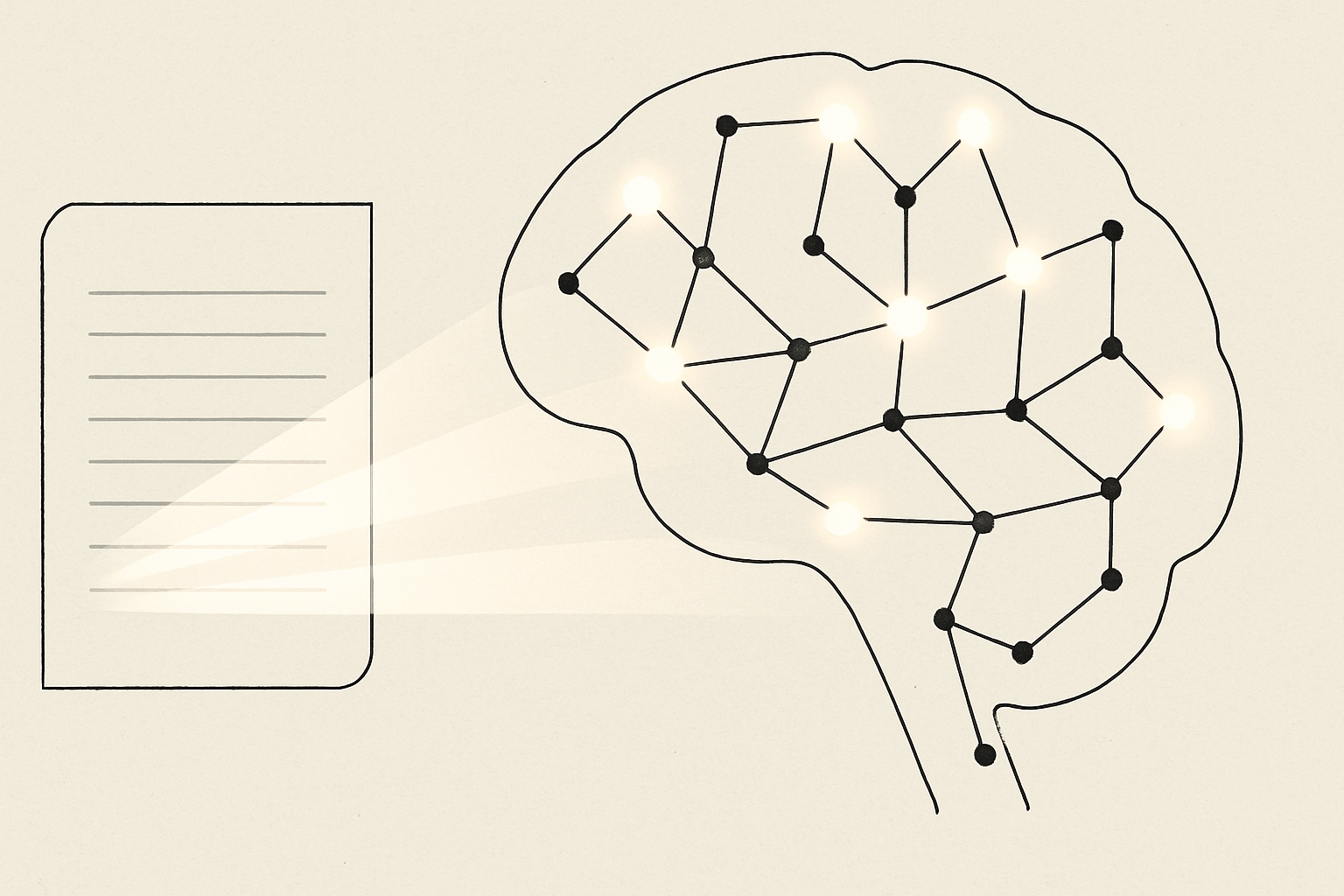
Here’s what I keep coming back to. While I believe humans are immensely complex and sophisticated, our single greatest accomplishment wielding those traits may just have been the thousands of years we spent documenting our own outputs — in text, in math, in law, in science, in art — in such a way that a computer can now learn from our reasoning to date.
We wrote it all down. Every contract, every theorem, every novel, every medical study, every legal opinion, every engineering spec. And after ingesting this huge amount of human creation, I don’t feel that machines will have much of a problem replicating the patterns. Not because machines are brilliant, but because we were generous enough to leave them the answer key.
The Speed Problem
I’m blatantly of the rather aggressive position that this is about to change at warp speed. Now — is that unlikely to be exactly how it actually goes? Probably. These things always take longer than the optimists predict and arrive faster than the skeptics expect. Somewhere in the messy middle is reality.
But the direction is clear. And the sequencing — rules-based, then creative, then manual — isn’t speculation. It’s already visible if you know where to look.
The question isn’t whether your work is at risk. It’s when. And the honest answer, for most knowledge workers, is a lot sooner than feels comfortable.